Category: Guidance

  • How to Be More Productive Every Day

    How to Be More Productive Every Day

    Everyone wants to be more productive but productivity isn’t about doing more. It’s about doing the right things, at the right time, with focus.

    Whether you’re a student, working professional, or business owner, small daily habits can dramatically improve how much you get done.

    This guide will show you simple, realistic ways to be more productive without burnout.

    Start Your Day With a Clear Plan

    Productivity begins with clarity.

    Before starting your day, ask yourself:

    • What are the top 3 tasks I must complete today?
    • What can wait?
    • What actually moves me closer to my goals?

    Writing these down helps your brain focus instead of feeling overwhelmed.

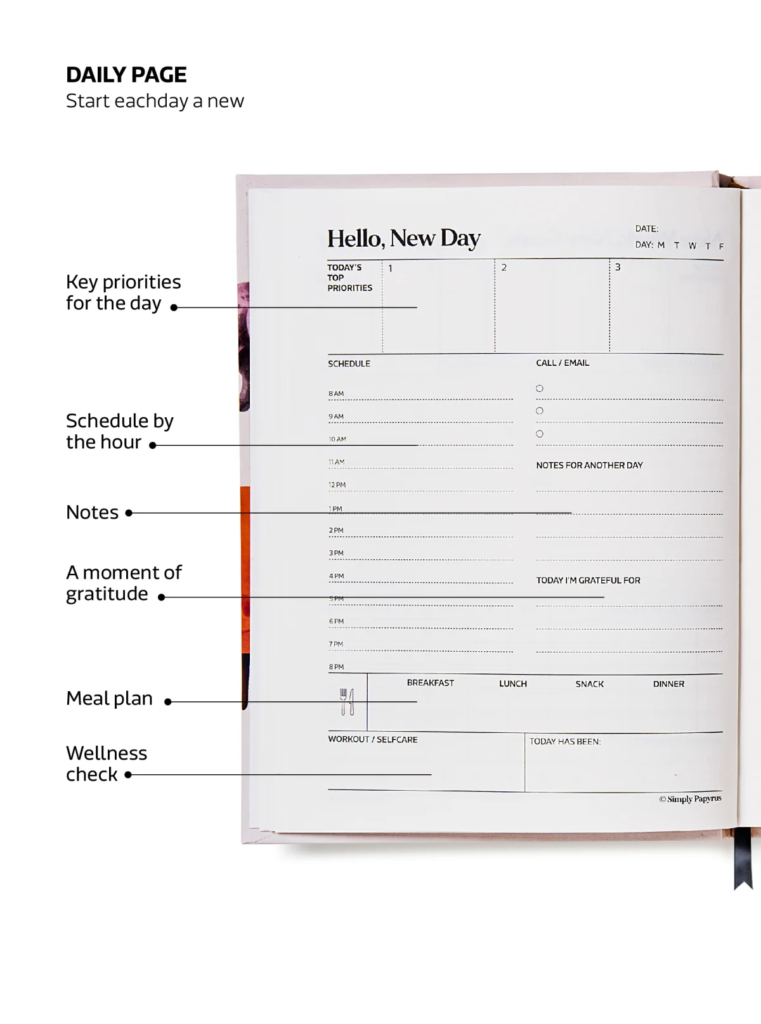
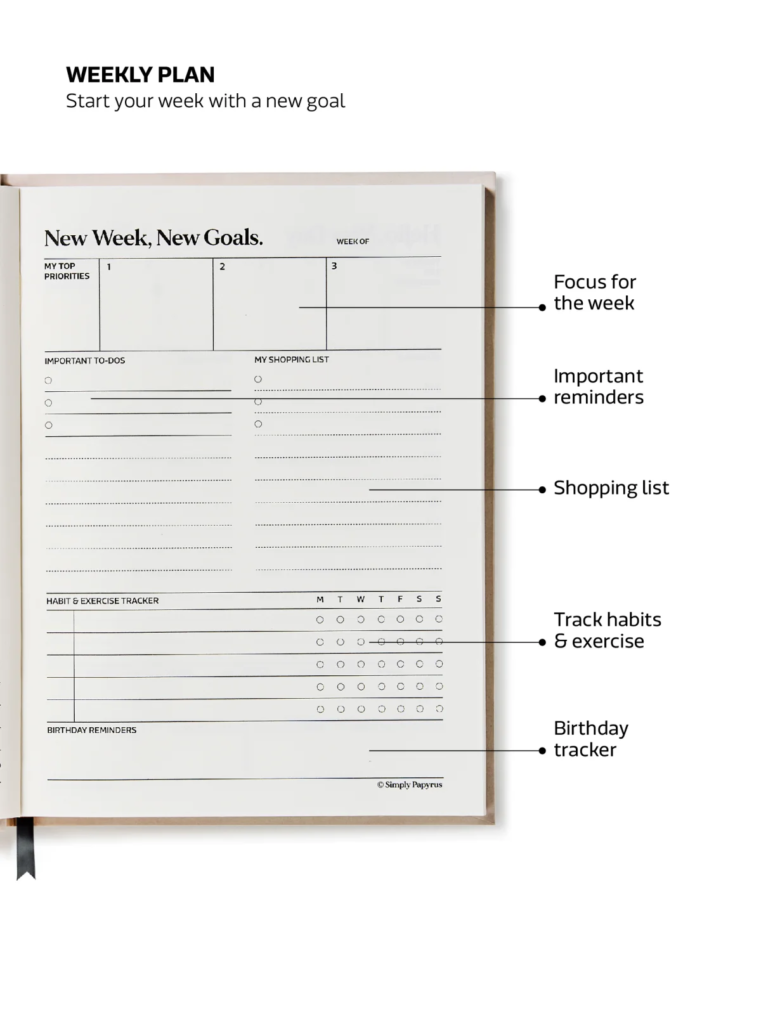
    Use an Undated Daily Planner for Flexibility

    One of the most effective productivity tools is a daily planner.

    Why undated planners work better:

    • No guilt for missed days
    • You can start anytime
    • Flexible for busy or slow days
    • Encourages consistency, not perfection

    Instead of rigid schedules, an undated planner lets you plan intentionally, one day at a time, making productivity sustainable.
    Break Big Tasks Into Small Actions

    Large tasks feel intimidating and often lead to procrastination.

    Example:

    • ❌ “Study for biology exam”
    • ✅ “Review diagrams for 30 minutes”

    Smaller steps feel achievable and build momentum.

    Focus on One Task at a Time

    Multitasking reduces efficiency.

    Instead:

    • Complete one task
    • Take a short break
    • Move to the next task

    Single-tasking improves accuracy and saves time in the long run.

    Set Time Limits for Tasks

    Use time blocks to stay focused.

    Example:

    • 25 minutes of focused work
    • 5-minute break

    Knowing there’s a clear end point helps you stay committed and avoid distractions.

    Reduce Digital Distractions

    Your phone and notifications are productivity killers.

    Simple fixes:

    • Keep your phone out of reach while working
    • Turn off unnecessary notifications
    • Use focus or do-not-disturb modes

    Even small changes can make a big difference.

    Review Your Day (This Is Powerful)

    At the end of the day:

    • Note what you completed
    • Identify what didn’t work
    • Carry unfinished tasks to the next day

    An undated daily planner is perfect for this reflection—helping you improve daily without pressure.

    Don’t Aim for Perfection – Aim for Progress

    Some days will be productive. Some won’t.

    That’s normal.

    Consistency matters more than perfection. Productivity is built through daily effort, not flawless days.

    Final Thoughts

    Being more productive doesn’t require complicated systems or extreme discipline. With clear priorities, focused work, and tools like an undated daily planner, you can create a routine that works with your life—not against it. Here is a full guide if you want to learn how to use undated daily planner to its full potential.


  • How to Check If an Online Answer Is Actually Correct

    How to Check If an Online Answer Is Actually Correct

    With so many answers available online, it’s easy to find an answer—but how do you know if it’s the right one?
    Incorrect or misleading answers can hurt your understanding and cost marks in exams. Learning how to verify answers is an essential skill for every student.

    This guide will help you confidently check whether an online answer is actually correct.

    Why Online Answers Can Be Wrong

    Online answers may be incorrect because:

    • They are copied without verification
    • They are incomplete or oversimplified
    • They come from unreliable or automated sources

    That’s why verification matters just as much as finding the answer.

    Compare With Your Textbook or Class Notes

    Your textbook is usually the most reliable source.

    Steps:

    • Match the online answer with definitions or formulas in your book
    • Check if the method aligns with what your teacher taught
    • Ensure the terminology is appropriate for your grade level

    If it contradicts your textbook, question it.

    Check the Step-by-Step Explanation (Not Just the Final Answer)

    Correct answers usually:

    • Show logical steps
    • Explain why each step is taken
    • Use correct formulas or rules

    If an answer only gives the final result without explanation, be cautious.

    Verify Using Another Reliable Source

    Never trust a single source.

    You can:

    • Cross-check with another educational website
    • Refer to class notes or revision guides
    • Use school-recommended resources

    When multiple trusted sources agree, the answer is likely correct.

    Test the Answer Yourself

    One of the best checks is personal verification.

    For math and science:

    • Substitute values back into the formula
    • Check units and calculations
    • Solve using an alternative method

    If the result matches, the answer is reliable.

    Look for Clear Language and Logical Flow

    Correct answers are usually:

    • Easy to follow
    • Well-structured
    • Free from random jumps in logic

    Confusing explanations or unclear steps often signal poor-quality answers.

    Check If the Answer Matches the Question Exactly

    A common problem is answer–question mismatch.

    Ask yourself:

    • Does the answer address all parts of the question?
    • Is it answering something slightly different?
    • Are any conditions or constraints ignored?

    Even a correct concept can be wrong if it doesn’t fit the question.

    Check Units, Symbols, and Terminology

    Small errors matter:

    • Wrong units (meters vs kilometers)
    • Incorrect symbols
    • Missing variables or constants

    Correct answers are precise and consistent.

    Ask Yourself: Can I Explain This Answer?

    A simple rule:

    If you can explain it in your own words, you understand it.

    If you don’t understand the explanation, don’t trust it blindly—clarify it first.

    Avoid Red Flags in Online Answers

    Be cautious if:

    • The answer has no explanation
    • It looks copied or irrelevant
    • It contradicts basic concepts
    • It promises “instant correct answers” without learning

    Quality educational content focuses on understanding, not shortcuts.

    Finding answers online is easy—but verifying them is what makes you a better student. When you cross-check, understand steps, and test answers yourself, you build confidence and avoid costly mistakes.

  • How to Find Correct Answers for Homework Without Cheating

    How to Find Correct Answers for Homework Without Cheating

    Homework is meant to help you learn, not just get marks. Yet many students struggle with the same question: How do I find the correct answers without cheating?
    The good news is, you can get help, understand concepts, and still stay honest. This guide shows you how.

    What Is Cheating in Homework?

    Cheating usually means:

    • Copying answers without understanding them
    • Submitting someone else’s work as your own
    • Using solution sites only to paste answers

    Learning, however, means:

    • Understanding how an answer is reached
    • Using resources to clarify doubts
    • Applying concepts in your own words

    The difference lies in intent and effort.

    1. Understand the Question First

    Before searching for answers, pause and read the question carefully:

    • What is being asked?
    • Is it asking for an explanation, calculation, or comparison?
    • Are there keywords like analyze, explain, justify, compare?

    Breaking down the question often solves half the problem.

    2. Use Your Textbook as the Primary Source

    Your textbook is designed to match your syllabus and exam pattern.

    • Re-read the chapter or section related to the question
    • Look at solved examples
    • Pay attention to highlighted definitions and formulas

    Most homework answers come directly from textbook concepts.

    3. Learn From Worked Examples, Not Just Final Answers

    When you look up solutions online:

    • Focus on step-by-step explanations
    • Ask yourself why each step is done
    • Try solving a similar problem on your own afterward

    This turns help into learning instead of copying.

    4. Use Homework Help Websites Responsibly

    Homework help platforms are useful when used the right way:

    • Use them to understand how to approach a question
    • Rewrite answers in your own words
    • Apply the same method to similar problems

    Think of these platforms as guides, not shortcuts.

    5. Ask Questions Instead of Copying

    If something isn’t clear:

    • Ask your teacher for clarification
    • Discuss with classmates (but don’t exchange answers)
    • Write down what you don’t understand and research that specific part

    Asking questions builds confidence and understanding.

    6. Practice Explaining the Answer Yourself

    A simple test:

    If you can explain the answer to someone else, you’ve learned it.

    After finding an answer:

    • Close the reference
    • Rewrite it from memory
    • Use simple language

    This ensures the work is truly yours.

    7. Focus on Learning, Not Just Marks

    Grades matter, but understanding matters more:

    • Concepts learned today help in future chapters
    • Honest learning reduces exam stress
    • Teachers can easily spot copied work

    Students who focus on understanding perform better in the long run.

    Finding correct answers without cheating is not about avoiding help—it’s about using help wisely.
    When you understand concepts, practice honestly, and learn step by step, homework becomes a tool for growth rather than pressure.